
Some Places Matter More Than the Invoice. My Visit to an Animal Rescue Sanctuary in Texas


I was recently asked to visit a rural property near Decatur, Texas, to locate buried electrical cables before construction work began on a new barn for their animals. On the surface, it was a straightforward request. In reality, it turned into one of the most meaningful site visits I have had in my career.
The property belongs to a non profit animal rescue, education and therapy sanctuary in Texas run by Brooks Trotter and Karen Renee. The ranch spans roughly 180 acres and is home to rescued horses, donkeys, buffalo, and longhorn cattle. Many of the animals were saved from the final auction before being sent to slaughter. Some came from severe neglect and abuse. Others were simply discarded once they were no longer useful.
What struck me immediately was the environment.

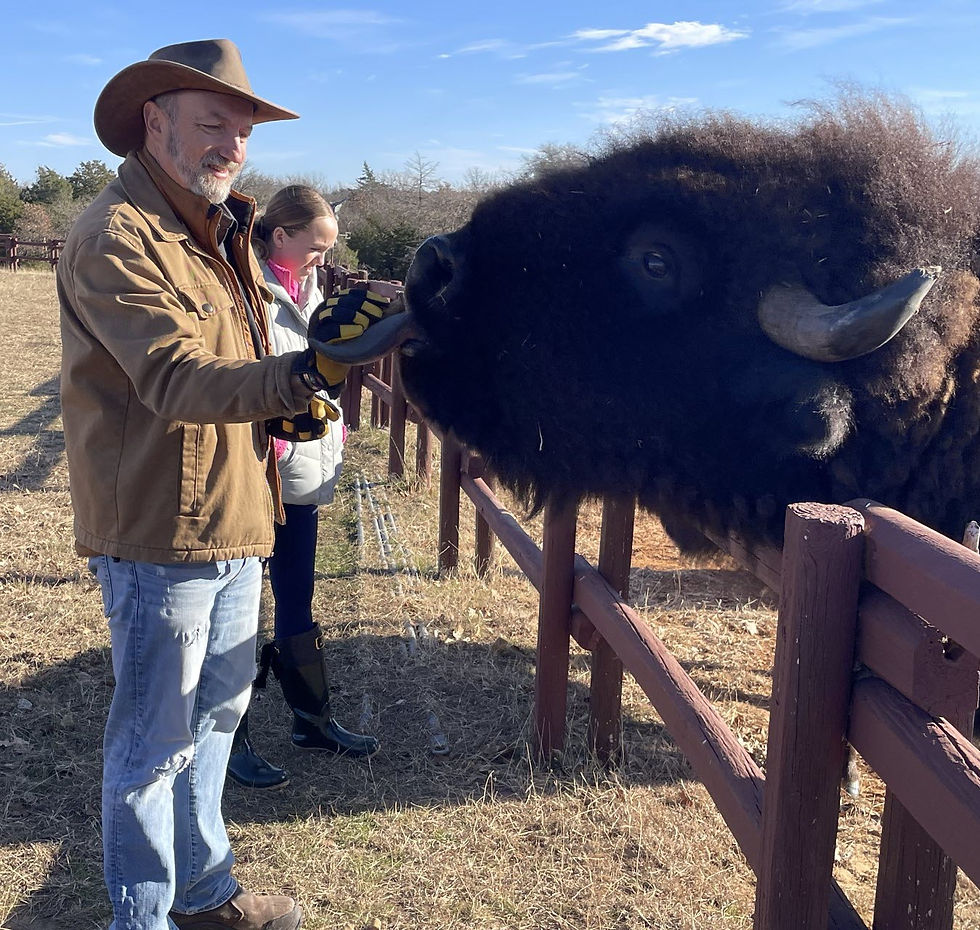
When I arrived, I parked next to several buffalo near the house. Horses were excited to see me and began making their way over to my truck, while donkeys called out from across the field. The animals roam freely across the property and even near the residential living area. The porch is fenced for safety, but the rest of the ranch belongs to the animals. The sanctuary is very health and safety focused, and during feeding times or when necessary, the larger animals are safely managed behind fencing to ensure both animal welfare and visitor safety.
My family joined me that day and my daughter's favorite animal was the smallest donkey on the ranch, appropriately named Chicken, who also happens to be the loudest animal there. Watching her interact with him and the rest of the animals was a reminder of why places like this matter.

This sanctuary does not charge anyone to visit.
Veterans dealing with trauma, children with special needs, and scout groups are welcomed onto the property at no cost. Horses are professionally trained for therapy and will calmly approach people, often resting their heads on a shoulder during sessions. It is clear that these animals are not just housed here. They are loved. Karen refers to them as her children, and after spending time there, it is easy to understand why.
I donated my time that day. Not because I was asked to, but because it was the right thing to do.
Damage prevention, at its core, is about protecting what matters before harm occurs. Most of the time, that means buried infrastructure. Occasionally, it means recognizing when a place and a mission deserve support beyond a standard scope of work.
This was one of those times.
I do not routinely share causes or ask for support, but what is happening at this sanctuary is special. They rely entirely on donations and volunteers, and they give freely to animals, veterans, children, and community groups without asking anything in return.
If this resonates with you and you are in a position to help, I encourage you to learn more about their work at:

Or reach out directly to Karen or Brooks to ask how you can support their mission at Rush Creek Sanctuary.
Some sites stay with you long after the equipment is packed up. This was one of them and I am looking forward to returning for a visit.


